Container Loading Check (CLC): The Last Inspection Before It's Too Late
A passed pre-shipment inspection tells you the goods were right. It doesn't tell you the goods were shipped. A CLC covers the one event no other inspection sees — the hours between the empty container arriving and the seal clicking shut.
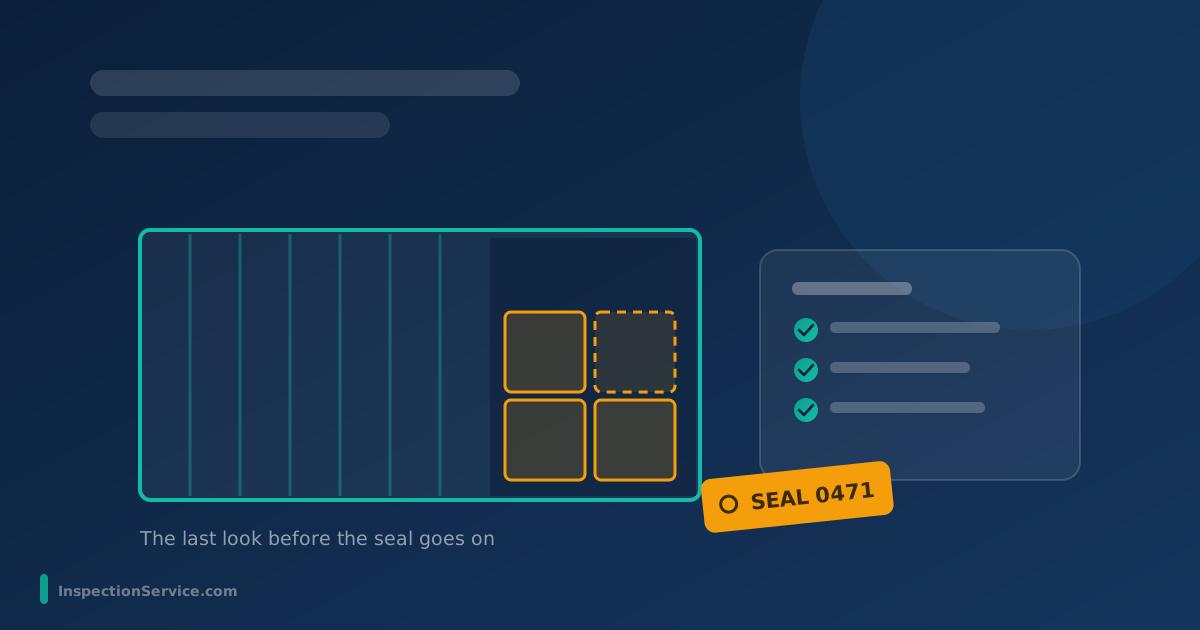
A passed pre-shipment inspection tells you the goods were right. It doesn't tell you the goods were shipped. Between a PSI and your warehouse sits one brief, high-stakes event no other inspection covers: a few hours at the factory gate when your order is carried, carton by carton, into a steel box that then crosses an ocean. A Container Loading Check (CLC) puts independent eyes on exactly that event — because once the seal clicks shut, every question about quantity, condition, and what actually went in the box becomes somewhere between expensive and impossible to answer.
This guide covers what a CLC actually verifies, the failure modes it exists to catch, what it costs, and the order profiles where it earns its fee — plus the ones where it honestly doesn't.
What a CLC is — and the one thing it isn't
A Container Loading Check (also called Container Loading Supervision, CLS) is an on-site inspection on the day of loading. The inspector is present from the moment the empty container arrives until it's sealed, and verifies five things:
- The container itself — before anything is loaded: structural damage, holes, rust, water stains, odours, residues from previous cargo, working doors and locks. A container that will spend weeks at sea with your goods inside gets checked the way you'd check a used car.
- Quantity — every carton counted against the packing list, pallet counts, random carton weight checks against declared weights.
- Identity — shipping marks, carton labels, and assortments verified against the PO. The right products going into the right container.
- Loading method — stacking, bracing, securing; heavy items low, fragile items protected, weight distributed. Most transit damage is loaded into the container, not inflicted by the sea.
- The seal — seal number recorded, matched to shipping documents, photographed. That photo is what turns “we shipped it” into evidence.
What a CLC catches that nothing else can
- Quantity shortfalls. The classic: 2,000 cartons on the invoice, 1,840 in the container. Discovered at your warehouse, it's a dispute the supplier wins by default — you have no proof. Discovered at loading, it's fixed before the truck leaves.
- Product substitution after the PSI. A PSI inspects a sample days before shipping; the goods then sit at the factory. A CLC closes the gap between “inspected” and “shipped” — the window where passed goods can be swapped, diluted with rejected units, or mixed with another order.
- The bad container. Holes you can see daylight through, wet floors, chemical odours that transfer to textiles, rust flakes over food-adjacent cargo. Water damage from a single pinhole can write off a container of cartons.
- Loading damage. Cartons crushed under badly stacked weight, no bracing so the load shifts at the first hard braking, heavy goods on fragile ones. The damage shows up at destination; the cause happened at origin, unwitnessed.
- Documentation gaps. Seal number that doesn't match the bill of lading, missing shipping marks — small discrepancies that become customs delays or voided insurance claims.
The insurance-claim angle most buyers miss
When a shipment arrives damaged or short, the first question any insurer or lawyer asks is: what condition were the goods in when the container was sealed? Without independent documentation, the answer is “nobody knows” — and claims die on that answer. A CLC report, with timestamped photos from empty container to applied seal, is exactly that documentation. For a one man-day fee, it converts “he said, she said” into a dated photographic record.
When a CLC earns its fee
- High-value or high-volume shipments, where a shortfall or write-off is five or six figures;
- New suppliers — the same gap-closing logic as the rest of the first-order inspection stack;
- A history of shortages or transit damage — the cheapest way to find out whether the problem is the factory or the voyage;
- Mixed-SKU or multi-container loads, where loading errors are most likely;
- Moisture- and contamination-sensitive goods — textiles, furniture, food-adjacent products, electronics;
- Letter-of-credit shipments, where documentation discrepancies cost real money.
Skip it when the order is small, the supplier is proven over many shipments, and the goods are robust commodity cartons — the maths of a man-day against a low-value, low-risk container doesn't always work.
The efficient combo: many buyers book the PSI and CLC with the same provider — quality verdict first, loading supervision on dispatch day. Same booking flow, same man-day economics, full coverage from production line to sealed container.
What it costs
A CLC is priced like other inspections: typically $250–350 per man-day from independent providers in most Asian markets. One container load is normally one man-day. Multi-container loadings need an inspector present per container — worth pricing as a package.
Booking one: the practical details
Timing is the whole game: the inspector must be on-site when the empty container arrives, which means the booking depends on the factory's loading date — a date that slips. Book as soon as the loading date is set, confirm it with both factory and provider the day before, and make sure the factory knows loading cannot start before the inspector arrives. Send the provider your packing list, PO, and shipping marks in advance — the count is only as good as the documents it's reconciled against. The preparation checklist covers the rest.
The bottom line
A container loading check is the cheapest insurance in the inspection toolkit: one man-day standing between a passed inspection and everything that can quietly go wrong before the seal goes on. It won't tell you your product is good — that's the PSI's job — but it's the only thing that proves what left the factory, in what condition, in which container, behind which seal. For shipments where that proof matters, there is no substitute.
Compare free quotes from vetted providers offering container loading checks across 24 countries — matched to your factory location and loading schedule.
Frequently asked questions
A PSI verifies product quality against your specification days before shipping, using AQL sampling. A CLC supervises the physical loading on dispatch day — container condition, carton counts, loading method, and sealing. The PSI answers “are the goods right?”; the CLC answers “did the right goods actually ship, undamaged, in a sound container?”
Typically $250–350 per man-day from independent providers in most Asian markets — one man-day per container load in most cases. Multi-container loadings require an inspector per container.
They can be booked together with the same provider, but the PSI is better done a few days earlier — if goods fail inspection on loading day, there's no time left to fix anything. The combination that works: PSI with enough lead time to act, CLC on dispatch day.
No — a CLC verifies counts, condition, labelling, loading method, and the container itself. The inspector documents visible carton damage but doesn't re-inspect products against specifications. For quality verification, book a pre-shipment inspection.
Structural damage, holes (checked from inside for daylight), rust, water stains, floor condition, odours and residues from previous cargo, and functioning doors and locking bars — before authorising loading to begin.
Often not — for low-value, robust goods from a proven supplier, the man-day fee may outweigh the risk. It earns its fee on high-value loads, new suppliers, mixed-SKU containers, moisture-sensitive goods, and anywhere a documented chain of custody matters (insurance, letters of credit).