Product Sorting & Rework: How a 100% Sort Actually Works
When a lot fails inspection and you choose to sort it, the practical questions arrive fast: who sorts, against what standard, how long it takes, and how you know the good pile is actually good.
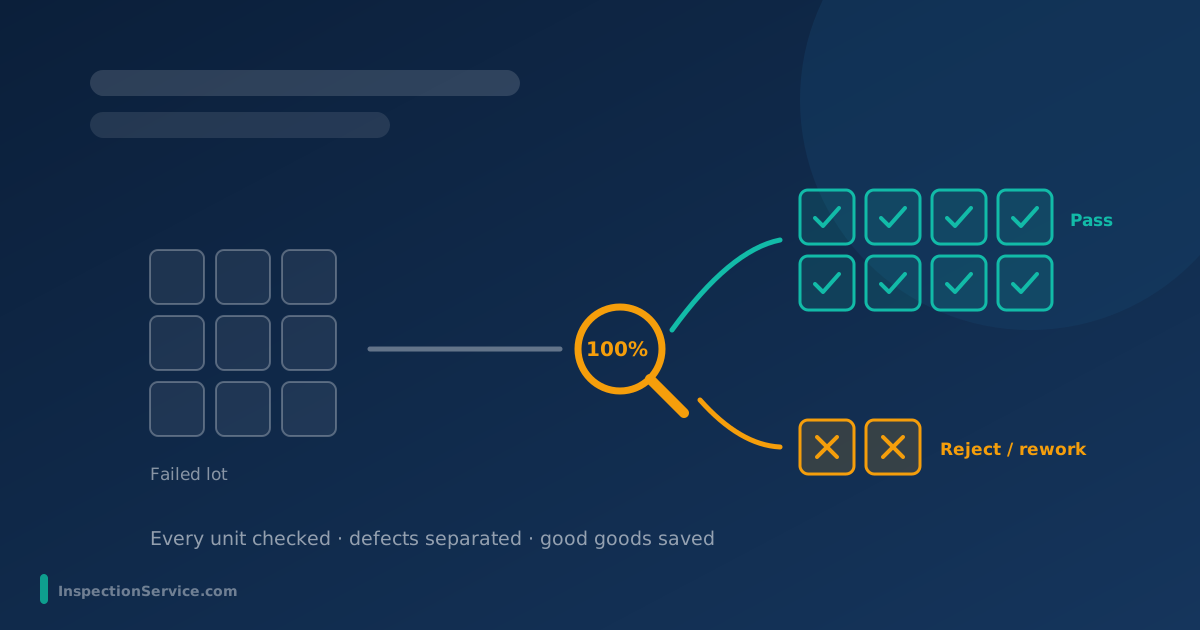
When a lot fails inspection, the hard part looks like the decision: rework, sort, accept with a concession, or reject. We covered that in what to do when your inspection fails. But if you choose sorting, a second set of questions arrives quickly, and they're practical ones. Who does the sorting? Against what standard? How long will it take? How do you know the “good” pile is actually good?
This guide is about running the sort itself: setting it up, what happens on the floor, where rework fits, how to verify the result, and the defects a sort will never catch.
Sorting and rework are two different jobs
They're usually sold together, but they solve different problems.
Sorting checks every unit (100%, not a sample) and separates conforming goods from defective ones. Nothing gets fixed. The output is two piles and a count.
Rework repairs the defective units so they can rejoin the good pile: re-labelling, re-packing, re-stitching, touch-ups, component replacement. Every reworked unit has to be checked again, because a fix can create a new defect.
A sort-only job makes sense when you can afford to lose the defective units, or when the factory will replace them. Sort-plus-rework makes sense when the defects are cheap to fix and the units are worth recovering, such as wrong labels, damaged polybags, missing accessories or a loose thread.
Before anyone touches a carton: set the sort criteria
Most sorting problems start here. The sorters can only be as accurate as the instructions they're given.
- Name the defects. List the exact defects to sort for, taken from the failed inspection's defect log, not “check quality.” A sort for “misaligned logo print” is fast and reliable. A sort for “any defect” is slow and inconsistent.
- Define the limit with physical samples. For anything judged by eye, such as scratches, colour shade or print quality, set aside reference units showing the worst acceptable piece and the first rejectable one. Without them, two sorters will draw the line in two places.
- Keep defect classes separate. A critical defect found during the sort is a different matter from a cosmetic one. Critical finds should be counted, set aside and reported immediately, because they may change your decision about the whole lot.
- Agree the paperwork upfront: the count per defect type, what happens to rejected units (quarantined, marked, destroyed, returned), and photos.
On the floor: what a third-party sort looks like
A sorting team takes over a space at the factory or warehouse and works through the lot carton by carton: open, check each unit against the criteria, repack the good units, and mark and segregate the rejects. Good providers mark sorted cartons so nothing gets counted twice or slips back unsorted, and keep the rejected units physically separate from anything going into the container.
Duration scales with quantity. Sorting is priced like other inspection work, per man-day, but because every unit is checked, it takes far more man-days than a sample-based inspection. How many depends on the product and the defect: checking a visible label is quick, while checking fit, function or measurements takes much longer per unit. Ask providers to quote a team size and duration for your specific lot and defect list, not just a day rate.
Rework: keep the scope tight
If rework is part of the job, write down exactly what it covers before it starts:
- Which defects get reworked, and which units are written off.
- The method. Some fixes look fine but fail later, like glue over a broken joint or a relabel over a misprint that shows through. If the method isn't stated, you'll get whatever is quickest.
- Where it happens. On-site rework by the sorting team keeps everything in one controlled process. Rework done by the factory's own line means the units must come back through the sort.
- Re-checking. Every reworked unit is inspected again before it goes back into the good pile.
Verifying the result: never trust “sorted” without checking
A finished sort report tells you what the sorting team did. It doesn't prove the result. The good pile still needs an independent check, and the standard way is a fresh AQL inspection of the sorted lot, briefed specifically on the defects the sort targeted. If those defects still turn up above the accept number, the sort missed them, and you know before shipping rather than after.
The same logic covers the sort report itself. It should show units checked, units passed, units reworked and re-approved, units rejected, a breakdown by defect type, and photos. The same tests you'd apply to an inspection report apply here: do the numbers add up, and do the photos show your product?
What a sort can't catch
Sorting works when a defect is visible, or quickly testable, on each unit. It doesn't work when:
- The defect is inside the product. Wrong internal components, poor welds under a cover, or the wrong material grade can't be found by opening cartons and looking.
- Checking destroys the unit. Strength tests, drop tests and chemical tests can't be run on 100% of the lot.
- The defect is in the material across the whole lot. A wrong fabric composition or an out-of-spec batch of resin affects every unit. There's nothing to separate.
In these cases the honest answer is that sorting won't save the lot. The real choice is between rework with replacement components, a concession, or rejection. Paying for a sort that can't find the defect only delays that decision.
Sorting after the goods arrive
Not every sort happens at the factory. Problems sometimes surface after shipment: a customer complaint, a returns spike, a marketplace flagging a defect. Sorting can then be done at your destination warehouse or 3PL to pull defective stock before it reaches more customers. This is sometimes called containment sorting, a term common in automotive supply chains. The principles are the same: name the defect, set limit samples, segregate, count and verify. The difference is that you're now paying sorting costs on top of freight and duties for defective goods, which is the strongest argument for catching problems at origin with a pre-shipment inspection.
Who pays
The usual principle, and one worth writing into your purchase orders, is the same as for re-inspection: the supplier bears the cost of sorting and rework when its goods failed. In practice this is a negotiation. A third-party sort report showing exactly how many units were defective, and of what type, is your strongest evidence in it. Agree the principle in your terms before production starts, not after the fail.
The bottom line
Sorting is a precise tool. When defects are visible, specific and confined to part of the lot, a well-briefed third-party sort can rescue a shipment in days. When defects are hidden, everywhere, or only detectable by destroying the unit, no amount of sorting will help. The difference between those outcomes is set before the first carton is opened: clear criteria, limit samples, an independent team, and a verification inspection at the end.
Need a sorting team? Compare free quotes from vetted providers offering product sorting & rework across 24 countries, matched to your factory or warehouse location.
Frequently asked questions
Sorting checks every unit and separates good from defective without fixing anything. Rework repairs defective units so they can be shipped. They are often combined: sort the lot, rework what's fixable, and re-check every reworked unit.
It depends on lot size, the product and what's being checked. A visible label check is fast. Fit, function or measurement checks take much longer per unit. Ask providers to quote team size and duration for your specific lot and defect list.
Sorting is priced per man-day like other inspection services, but checking every unit means more man-days than a sample-based inspection. Total cost scales with quantity, product complexity and the defect being checked.
It's better to use an independent team. A factory sorting its own failed output has an incentive to be lenient, and a third-party count is stronger evidence when you negotiate who bears the cost.
Run a fresh AQL inspection on the sorted lot, briefed on the defects the sort targeted. If those defects still appear above the accept number, the sort missed them.
No. Hidden defects, defects only found by destructive testing, and material problems affecting the whole lot can't be fixed by sorting. In those cases the choice is between rework with replacement parts, a concession, or rejection.