Garment & Apparel Inspection: Checklist & Standards
Apparel is the highest-volume, highest-variation category in consumer goods — which is exactly why it fails inspection so often. Here's a complete pre-shipment inspection checklist for garments and textiles, with the measurements, defects and AQL levels that matter.
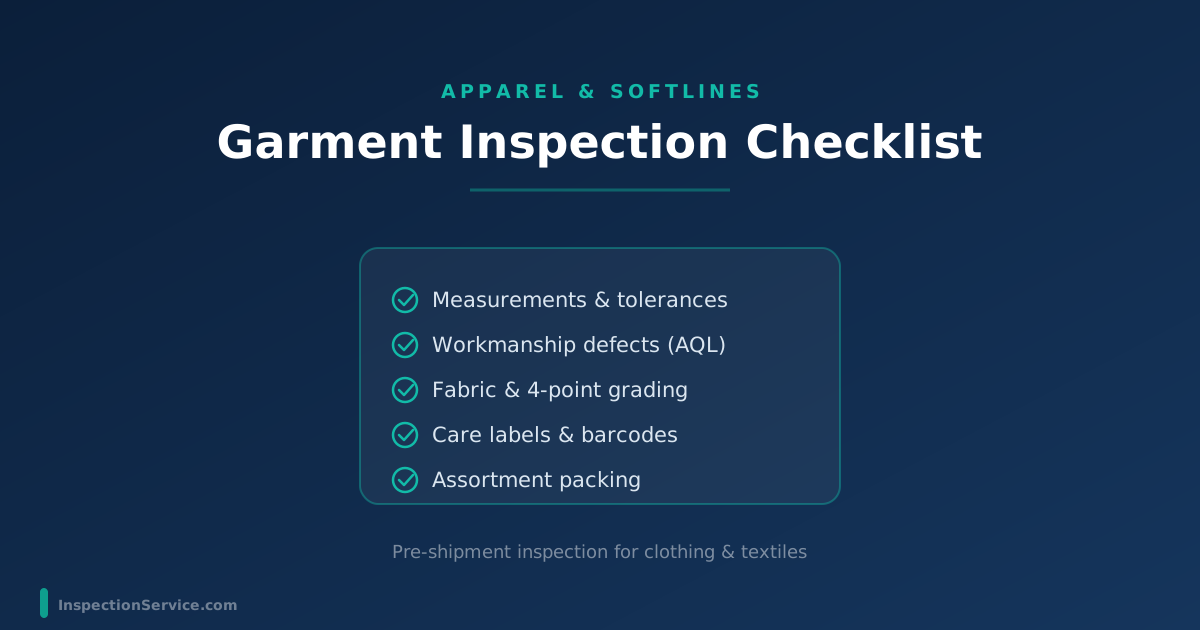
This is a category-specific companion to our complete guide to pre-shipment inspections. If you import clothing, home textiles, bags or accessories, the general PSI framework applies — but the checkpoints below are what an experienced softlines inspector actually verifies, and where garments most often go wrong.
1. Quantity & presentation
The inspector confirms the finished, packed quantity against the order and checks that goods are presented for a genuine random sample — not a hand-picked "golden" carton. Cartons are selected across the whole shipment.
2. Style, colour & conformity to the approved sample
Every sampled garment is compared against your approved (golden) sample and tech-pack: correct style, construction, colour and shade (checked under proper lighting against the lab dip or reference), correct trims, buttons, zips and components. Shade variation within and between cartons is a classic softlines problem.
3. Measurements against the size spec
The inspector measures key points of measure (chest, waist, length, sleeve, inseam, etc.) on sampled units across sizes and compares them to your graded size spec and tolerances. Measurements out of tolerance are the single most common reason apparel fails — and the most avoidable, because it comes down to a clear, agreed spec.
4. Workmanship defects (graded by AQL)
Each sampled garment is inspected for workmanship defects, recorded as critical, major or minor and judged against your AQL. Typical apparel defects:
| Class | Typical apparel examples |
|---|---|
| Critical | Broken needle fragment in garment, prohibited chemical/safety label failure, choking hazard on children's wear |
| Major | Open seam, broken stitching, holes, prominent stains, wrong size garment in the size bag, non-functioning zip, heavy shade variation |
| Minor | Loose thread ends, slight puckering, small mark in a concealed area, minor untrimmed thread |
The usual AQL for general apparel is 2.5 for major and 4.0 for minor, with critical at 0. See how those choices change your sample size with the AQL calculator.
5. Fabric & material checks
Beyond finished-garment workmanship, the inspector checks fabric appearance and, where specified, applies the 4-point system to grade fabric defects (holes, slubs, stains, weaving faults). They confirm the material matches your spec — fibre content feel, weight/GSM where a gauge is available, and hand-feel against the reference.
6. Care labels, content labels & barcodes
Labeling is a compliance minefield in apparel. The inspector verifies:
- Fibre content and care instructions match the approved artwork and destination-market requirements
- Country of origin is correct and correctly placed
- Size labels match the garment inside the bag
- Barcodes / hangtags / retail tickets are present, correct and scannable
7. On-site tests
Depending on your spec, the inspector may run field tests such as a colour rub/crocking check, a seam/stretch check, a zip fatigue test, or a wash-care label vs. actual fibre cross-check. (Full chemical and physical testing is a lab function, not a field inspection — but field tests catch the obvious failures cheaply.)
8. Packing & assortment
Finally, the inspector verifies retail packing (poly-bags, suffocation warnings where required, hangers, folding), ratio/assortment packing (the size and colour breakdown per carton matches your packing list — a frequent apparel error), carton markings, and export packaging durability, often with a carton drop test.
Apparel pre-shipment checklist at a glance
| Checkpoint | Verify |
|---|---|
| Quantity & random sampling | Packed qty vs order; representative sample |
| Style & colour | Matches approved sample, tech-pack, shade reference |
| Measurements | Key points within written tolerance, across sizes |
| Workmanship | Defects graded critical/major/minor vs AQL |
| Fabric | Correct material; 4-point fabric grading if specified |
| Labeling | Content, care, origin, size, barcodes correct & scannable |
| On-site tests | Rub, seam, zip, care-vs-content as specified |
| Packing | Retail packing, assortment ratio, carton marks, drop test |
Grab our free, downloadable Apparel & Softlines PSI template & checklist — the full checkpoint list, ready to edit in Word. Our AI template builder can also generate one tailored to your exact garment from your tech-pack.
Frequently asked questions
For general apparel the common combination is AQL 0 for critical, 2.5 for major and 4.0 for minor defects. Premium or higher-risk garments (formalwear, performance wear, children's) often tighten major to 1.5. Use the AQL calculator to see how each choice affects your sample size and accept/reject numbers.
The 4-point system grades fabric defects by size: penalty points (1 to 4) are assigned to each flaw based on its length or severity, and the total points per 100 square yards must stay under an agreed threshold for the fabric roll to pass. It's the standard method for judging fabric quality before or during garment production.
Because fabric behaves differently from paper patterns, cutting and sewing introduce variation, and tolerances are often left vague. The fix is a graded size spec with explicit tolerances for every point of measure, handed to both the factory and the inspector before production.
A pre-shipment inspection includes on-site field tests (rub, seam, zip, care-vs-content) but not full laboratory testing. Chemical safety, colourfastness and physical performance testing are done separately in an accredited lab, usually earlier in the process on production samples.
Assortment (ratio) packing is when each carton contains a specified mix of sizes and colours — for example 1 small, 2 medium, 2 large, 1 extra-large. Inspectors verify the actual pack ratio matches your packing list, because a mismatch causes retail allocation problems even when the garments themselves are fine.