Golden Samples: How to Set the Standard Your Inspection Is Judged Against
Most inspection disputes aren't about spotting defects. They're about what "correct" looks like. Here's how golden samples and limit samples settle that.
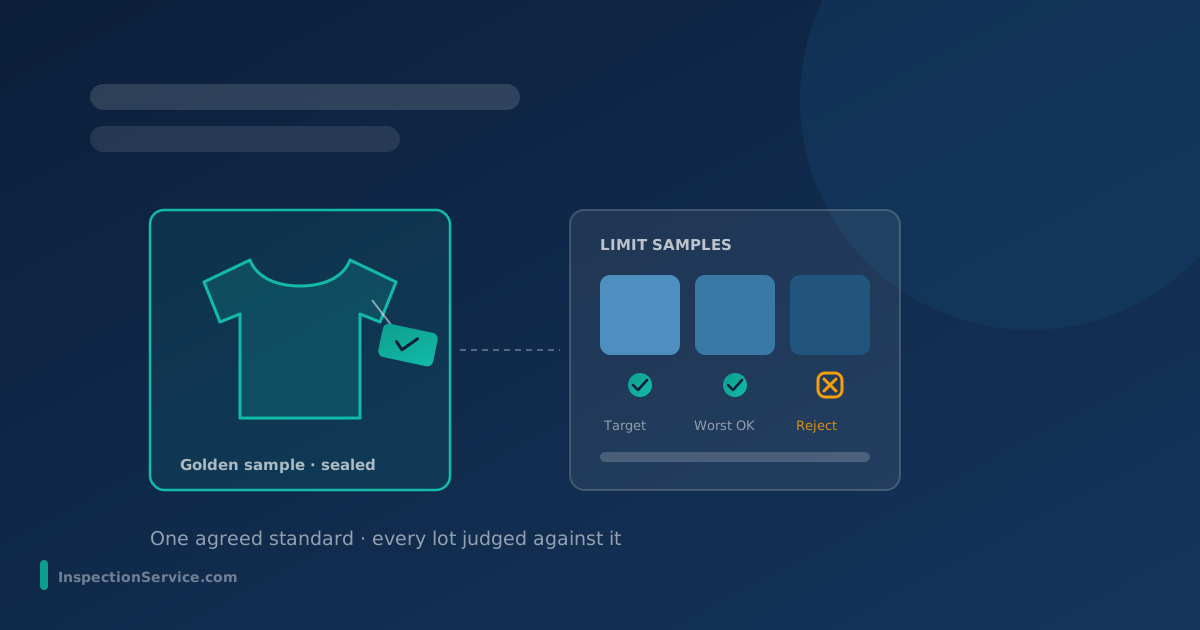
Most inspection disputes aren't about whether an inspector can spot a defect. They're about what "correct" looks like. Is that shade of blue within tolerance? Is a small scratch on the underside acceptable? Does the stitching match what was agreed? A specification sheet can only describe so much. For everything it can't, inspectors need something they can hold in their hands and compare against.
That's the job of a golden sample. This guide covers what it is, how to approve and seal one properly, when you also need limit samples, and how to keep them valid so your inspections stay meaningful order after order.
What a golden sample is, and what it isn't
A golden sample (also called an approved, master or sealed sample) is a unit you have formally approved as the standard production must match. It's the physical reference that bulk goods, and every inspection, are compared against.
It's worth separating it from the other samples you'll see during development:
- Development and prototype samples test the design. They often change from round to round and aren't a standard for anything.
- Pre-production (PP) samples are made with the actual production materials and methods. In garments and many other categories, the approved PP sample effectively becomes the golden sample, and bulk production shouldn't start until it's signed off.
- Top-of-production (TOP) samples are pulled from the first bulk units to check the factory is actually reproducing the approved PP sample. They're compared against the golden sample, not the other way round. See our guide to during-production inspections.
- Shipment samples are pulled from finished, packed goods and kept as a record of what was actually shipped.
Why inspections fail without one
When there's no agreed physical reference, inspection results become arguments. An inspector who has only a spec sheet and photos has to interpret colour, texture, finish and "workmanship" on their own. The factory will interpret them differently. You get one of two outcomes: a report full of borderline calls the factory disputes, or a lenient inspection that passes goods you'd have rejected.
With a golden sample on site, the question changes from "is this good enough?" to "does this match?" That's a question an inspector can answer consistently.
How to approve and seal a golden sample properly
A golden sample only works if everyone agrees it's the sample. A few steps make that stick:
- Approve it against the spec, not instead of it. Check the sample against your technical specification, drawings and measurements. Any deviation you accept should be written down, so the sample and the spec say the same thing.
- Make it physically unambiguous. Sign and date a label or tag attached to the sample, and seal it in a bag or box with a tamper-evident seal, so it can't be swapped or altered. Many buyers note the order or style number and the approval date on the seal itself.
- Make several, and distribute them. You need identical approved samples in at least three places: one with you, one with the factory, and one with your inspection provider (or sent to the factory for the inspector to use on the day). If the inspector has to rely on the factory's copy, you're trusting the party being inspected to keep the reference honest.
- Record what it represents. Photograph the sealed sample from all sides, note colour references (for example Pantone or lab dip numbers), and file it with the approved spec. The photos help when a physical sample can't be on site.
Limit samples: drawing the line on "acceptable"
A golden sample shows what perfect looks like. Real production is never perfect, so for anything judged by eye you also need limit samples (sometimes called boundary samples): physical examples of the worst acceptable condition and the first unacceptable one.
Limit samples are most useful for:
- Colour and shade variation: the lightest and darkest acceptable shade, especially for dyed textiles, plastics and painted finishes.
- Cosmetic surface defects: the largest acceptable scratch, dent, pit or flow line on a visible surface.
- Natural materials: wood grain, leather markings, stone veining. Variation is normal, but there has to be a limit.
- Print and logo quality: sharpness, registration and coverage.
Without them, two inspectors (or an inspector and a factory QC) will draw the line in two different places. Limit samples also make defect classification consistent: whether a flaw counts as minor or major is far easier to agree when both sides can see the boundary. They're just as useful when a lot has failed and you need a third-party sort, because sorters need the same clear line.
Keeping samples valid
Samples age, and an out-of-date reference is worse than none, because it gives false confidence:
- Colours fade and materials change. Store samples away from light, heat and humidity. Textile and plastic colour references in particular should be checked and replaced periodically.
- Update after changes. Any approved change (new material, new supplier for a component, a design tweak) needs a new golden sample. Retire the old one clearly, so nobody inspects against it by mistake.
- Re-confirm for repeat orders. For reorders months apart, confirm the golden sample on file still matches the current spec before production starts.
What to send your inspector
Before a pre-shipment inspection, make sure the inspector has:
- the sealed golden sample, or confirmation of exactly where it is and that it's the approved one
- any limit samples, labelled "acceptable" or "reject"
- the approved specification, with any agreed deviations noted
- photos of the golden sample and the colour references
Our inspection preparation checklist covers the rest of what to send. And when you read the report, check that the inspector actually compared against the golden sample: a good report says so, and shows side-by-side photos where it matters. The same report red flags apply.
The bottom line
An inspection measures production against a standard. If that standard is vague, so is the result. A properly approved, sealed and shared golden sample, plus limit samples for anything judged by eye, turns subjective arguments into simple comparisons, and gives you a firm basis for accepting or rejecting a lot. It's one of the cheapest quality controls you can put in place, and it pays off on every inspection that follows.
Need inspections that are judged against your approved standard? Compare free quotes from vetted inspection providers across 24 countries.
Frequently asked questions
A unit you have formally approved as the standard that production must match. Inspectors compare bulk goods against it, especially for things a specification can't fully describe, such as colour, finish and feel.
Make identical approved samples and keep one yourself, give one to the factory, and make sure your inspection provider has one, so the inspector isn't relying only on the factory's copy.
A golden sample shows the target. Limit samples show the boundary: the worst acceptable condition and the first unacceptable one, for things judged by eye, like colour variation or cosmetic marks.
Often, yes. The approved pre-production sample, made with production materials and methods, usually becomes the golden sample. Bulk production shouldn't start until it's signed off.
Until something changes or the sample degrades. Replace it after any approved design or material change, store it away from light and heat, and re-check colour references for repeat orders.
It can, against the specification and photos, but subjective checks like colour, finish and workmanship become much harder to judge consistently, and results are easier for the factory to dispute.