First Order From a New Supplier in Asia: A Step-by-Step Quality Plan
The first order carries the most risk you'll ever take with a supplier. Seven steps that protect it, from checking who you're dealing with to watching the container doors close.
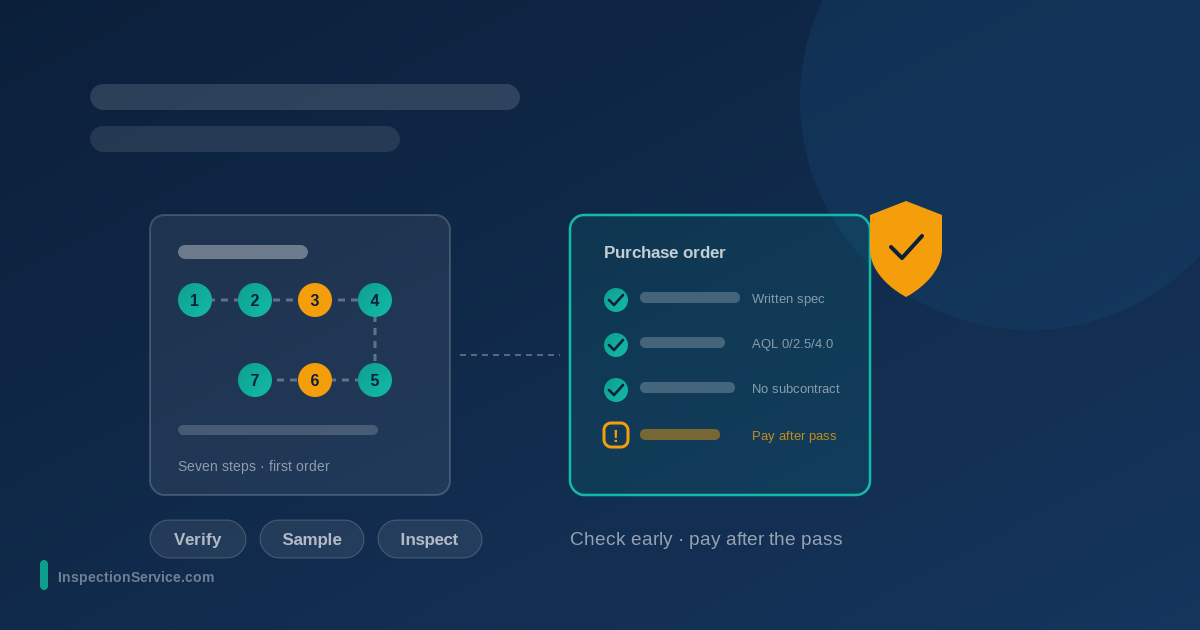
The first order with a new supplier carries the most risk you'll ever take with them. You don't yet know how they work, how they react to problems, or whether the factory that quoted you is the one that will make your goods. By the third or fourth order you'll have a track record. On the first, all you have is the plan you put in place before production starts.
This guide walks through that plan in seven steps, from checking the supplier to watching the container doors close. None of it is complicated, but skipping a step is where most first-order problems begin.
Step 1: Check who you're dealing with
Before you send money or designs, confirm that the supplier is a real, registered business and find out whether it's a factory or a trading company. Trading companies aren't a problem in themselves, but you need to know who actually makes your goods.
- Check the business registration. In China, every company appears in the national credit system under an 18-character code. Our guide to factory audits in China explains how to check it.
- Ask for the factory's name and address, and make sure the same company name appears on the contract and the invoice.
- For larger orders, audit the factory on site. A capability and quality audit confirms the factory exists and can make your product at your volume. For a small trial order, a supplier verification may be enough.
Step 2: Write down exactly what you're buying
Most disputes on first orders come down to a spec that was never written down. The factory makes what it thinks you meant, and you only find out when the goods arrive. Before production, agree in writing:
- materials, colours, dimensions and tolerances
- functions and any tests the product must pass
- packaging, carton markings, labels and barcodes
- the rules of your destination market, such as CE/UKCA, CPSIA, REACH or food-contact requirements
Put the spec, or a reference to it, in the purchase order. If it isn't in writing, it's hard to reject goods for not meeting it.
Step 3: Approve a sample, and keep it
Never move from a quote straight to bulk production. Approve a pre-production sample made with the real materials and methods, then sign, date and seal it so it becomes the reference for the whole order. Keep one yourself, give one to the factory, and make sure your inspector can see one. Our guide to golden samples explains how to set this up, including limit samples for anything judged by eye.
Step 4: Agree terms that keep some leverage
Your payment terms and contract do a lot of quality work.
- Payment. A 30% deposit with the 70% balance before shipment is a common arrangement with new suppliers in Asia. The key is to make the balance due only after the goods pass inspection, so the factory has a reason to fix problems before you pay.
- Inspection rights. State in the purchase order that the goods will be inspected by a third party, the inspection standard (for example AQL 0 / 2.5 / 4.0 for critical, major and minor defects), and what happens if the lot fails.
- Subcontracting. Add a clause that the order can't be moved to another factory without your written approval.
- Incoterms. Be clear who arranges and pays for shipping and insurance. FOB, EXW and DDP put different responsibilities on each side, and contracts should name the version they use, currently Incoterms 2020.
Step 5: Check production early
The most common first-order mistake is relying on one final inspection. If that inspection finds a problem, the whole order is already made. On a first order, add at least one earlier check:
- Initial production check at the start of production, to confirm materials and the first finished units match the sample.
- During-production inspection at around 20–60% complete, while there's still time to correct the line.
Our guide to DUPRO vs. pre-shipment inspection timing explains which to choose and why one final check on a first order is a risk.
Step 6: Inspect before you pay the balance
Book a pre-shipment inspection when at least 80% of the goods are finished and packed. The inspector draws a random sample and checks quantity, workmanship, measurements, function, packaging and labelling against your spec and the approved sample.
Give the inspector everything they need: the spec, the approved sample, the purchase order and your AQL levels. Our inspection preparation checklist covers the full list. When the report arrives, read the photos and findings, not just the pass or fail result. Here's how to tell whether a report can be trusted.
Step 7: Watch the goods leave
For valuable or mixed orders, a container loading check confirms the right quantity is loaded, cartons are in good condition, and the goods in the container are the ones that were inspected. It also records the seal number.
If the first inspection fails
It happens, especially on first orders, and it isn't automatically a reason to walk away. Ask the factory for a corrective plan, have the lot sorted or reworked where that makes sense, and book a re-inspection before paying. Our guides cover what to do when an inspection fails and how sorting and rework should work. How a supplier handles a failed first inspection tells you a lot about what the next orders will be like.
Timing: watch the holidays
If your first order will be in production between December and March, plan around Chinese New Year 2027 on 6 February, Vietnam's Tet on the same day, and Ramadan, which is expected to start around 8 February. Factories rush before these breaks and restart slowly after them, which is a risky time for a first order.
The bottom line
A first order is a test of the supplier, and of your own process. Verify who you're dealing with, put the spec and the sample in writing, tie the balance payment to an inspection, and check production early as well as at the end. By the time the goods ship, you'll know far more about the supplier than any quote could tell you, and you'll have the evidence to decide whether to place the second order.
Placing a first order in Asia? Compare free quotes from vetted inspection providers across 24 countries.
Frequently asked questions
Confirm the supplier is a registered business, find out whether it's a factory or a trading company, and for larger orders audit the factory on site before you pay a deposit.
Usually two or three: an early check during production and a pre-shipment inspection, plus a loading check for valuable orders. Relying on one final inspection leaves no time to fix problems.
A 30% deposit with the 70% balance before shipment is common. Make the balance due only after the goods pass a third-party inspection.
Yes. Approve a sample made with the real materials and methods, then sign, date and seal it so it becomes the reference for production and inspection.
AQL 0 / 2.5 / 4.0 for critical, major and minor defects is the most widely used combination. State it in the purchase order before production starts.
Ask for a corrective plan, have the goods sorted or reworked where possible, and re-inspect before paying the balance. How the supplier responds is useful information for future orders.